

India Mein Loan Dene Ka Business Kaise Start Karein in 2026?
Agar aap 2026 mein loan dene ka business, finance company, lending company ya digital lending business start karna chahte hain, to sabse pehle ek important baat samajhna zaroori hai:
Loan dena sirf ek commercial activity nahi hai. Business ka actual structure, funding model, customer interface aur financial activity ki nature ke basis par regulatory requirements apply ho sakti hain.
Agar aapka business predominantly financial activity karta hai, to RBI ke NBFC framework ke requirements relevant ho sakte hain.
RBI ke current FAQ ke according, Section 45-IA ke framework mein aisi company ko NBFC ke roop mein registration ki requirement ho sakti hai jo non-banking financial institution ka business kare. RBI ke FAQ mein ₹10 crore Net Owned Funds requirement bhi specified hai for the applicable NBFC registration framework.
Isliye “company register kar li aur ab loan dena start kar denge” approach safe nahi hai.
Is article mein hum step-by-step samjhenge:
Loan dene ka business kya hai
Loan company kaise start karein
NBFC kya hota hai
RBI licence kab required hota hai
NBFC registration ka process kya hai
Kitna capital chahiye
Kaunse documents chahiye
Digital lending business kaise start karein
Loan app ke liye kya requirements hain
Lending Service Provider (LSP) kya hota hai
NBFC aur LSP mein difference
Loan business mein compliance kya hoti hai
Kaunsi mistakes avoid karni chahiye
Bharat Cred Solutions se consultation kaise le sakte hain
1. Loan Dene Ka Business Kya Hota Hai?
Loan lending business ka simple meaning hai:
Kisi eligible borrower ko predetermined terms and conditions par money provide karna aur us amount ko interest/other permitted charges ke saath recover karna.
Loan business different forms mein ho sakta hai:
Retail Lending
Individuals ko loans:
Personal loan
Consumer loan
Vehicle finance
Education finance
Small-ticket loans
Business Lending
Businesses ko:
MSME loans
Working capital finance
Business loans
Equipment finance
Invoice-related financing
Specialized Lending
Specific sectors ke liye:
Microfinance
Housing finance
Infrastructure finance
Vehicle finance
Gold-backed lending
Other specialized credit models
Lekin loan product ka naam decide karna aur legally lending business operate karna do alag cheezein hain.
2. Kya Koi Bhi Company Loan De Sakti Hai?
Simply company incorporate karke commercial lending start karna automatically permissible nahi maana jaana chahiye.
RBI ke FAQ ke according, jo companies RBI ke NBFC registration framework ke scope mein aati hain unhe applicable Certificate of Registration aur prescribed Net Owned Funds requirements satisfy karni hoti hain.
RBI specifically states that companies conducting non-banking financial activity such as lending or investment as their principal business without obtaining the required CoR can face penal action.
Isliye business start karne se pehle regulatory classification karna extremely important hai.
3. RBI Ka 50-50 Principal Business Test Kya Hai?
Loan business planning mein ek important concept hai:
50-50 Test
RBI ke explanation ke according, financial assets agar total assets ka 50% se zyada hain aur financial assets se income gross income ka 50% se zyada hai, to company financial activity ko principal business ke roop mein conduct kar rahi ho sakti hai.
Isko broadly:
50% Financial Assets + 50% Financial Income
test ke roop mein samjha ja sakta hai.
Lekin actual business structure ko professional regulatory assessment ke through evaluate karna chahiye.
4. Agar Main 2026 Mein NBFC Start Karna Chahta Hoon To Kya Karna Hoga?
Agar proposed business RBI-regulated NBFC framework ke under aata hai, to broad journey kuch is tarah hogi:
Step 1 — Business Model Decide Karein
Sabse pehle define karein:
Kis customer ko loan denge?
Loan amount kitna hoga?
Secured ya unsecured?
Personal ya business loan?
Offline ya digital?
Apne funds se lending?
Institutional funding?
Co-lending?
LSP model?
Step 2 — Company Structure
Appropriate company structure establish karein.
Step 3 — Capital Planning
Required Net Owned Funds aur overall capital requirement assess karein.
Step 4 — Promoter & Management Assessment
Promoters/directors/management structure ko regulatory requirements ke according evaluate karein.
Step 5 — Policies & Systems
Prepare:
Credit policy
KYC policy
AML framework
Risk management
Recovery policy
Grievance redressal
Information security
Data/privacy framework
Internal controls
Step 6 — RBI Application
Applicable NBFC registration application RBI ke prescribed process ke through submit ki jaati hai. RBI's current FAQ refers applicants to the PRAVAAH portal and prescribed documentation.
Step 7 — Regulatory Review
Application, documents, ownership, capital, business model and other regulatory considerations review kiye ja sakte hain.
Step 8 — Approval / CoR
Eligible applicants ko applicable Certificate of Registration framework ke according approval milta hai.
Step 9 — Operational Setup
Approval ke baad:
Loan management system
KYC
Credit assessment
Collections
Customer support
Accounting
Reporting
Compliance
setup kiya jaata hai.
5. NBFC Banane Ke Liye Kitna Paisa Chahiye?
Ye 2026 mein sabse frequently searched questions mein se ek hai:
“NBFC registration ke liye kitna capital chahiye?”
RBI ke current FAQ ke according, applicable NBFC registration ke liye minimum ₹10 crore Net Owned Funds requirement hai, with the stated framework applying to new applicants; specialized categories can have different requirements.
For example, RBI's FAQ identifies different NOF requirements for specialized categories such as:
NBFC-IFC
IDF-NBFC
Mortgage Guarantee Company
HFC
NBFC-AA
NBFC-P2P
Therefore, ₹10 crore ko har possible lending business ke universal capital requirement ke roop mein present nahi karna chahiye.
Actual requirement depends on the proposed regulatory category.
6. Loan Company Start Karne Ke Liye Kaunse Documents Chahiye?
Exact documentation business structure aur application category par depend karegi.
Generally preparation mein include ho sakte hain:
Corporate Documents
Certificate of Incorporation
MOA
AOA
PAN
Registered office proof
Board resolutions
Promoter Documents
PAN
Identity proof
Address proof
Financial background
Source of funds
Net worth information
Business Documents
Detailed business plan
Business model
Project report
Financial projections
Lending model
Target customer profile
Loan products
Compliance Documents
KYC policy
AML policy
Credit policy
Risk management policy
Recovery policy
Grievance redressal policy
IT/data security framework
Important: Final document checklist applicable RBI category and current regulatory requirements ke according verify honi chahiye.
7. Online Loan Business Kaise Start Karein?
Aaj ke time mein loan business ka ek major model hai:
Digital Lending
Aap website, mobile application ya digital platform ke through loan application facilitate kar sakte hain.
Lekin digital lending ka matlab ye nahi hai ki koi bhi technology company automatically apne balance sheet se loans distribute kar sakti hai.
RBI ke Digital Lending Guidelines regulated entities and their lending arrangements ke around framework establish karte hain. RBI specifically explains the roles of Regulated Entities, Lending Service Providers and Digital Lending Apps.
8. Loan App Business Kaise Start Karein?
Agar aap loan app banana chahte hain, to pehle ye decide karein:
Model A — You are the lender
Aap khud regulated lending entity hain.
Model B — You are an LSP
Aap RBI-regulated lender ke technology/business partner ke roop mein customer acquisition, underwriting support, servicing, monitoring etc. jaise functions perform karte hain, subject to the applicable framework.
RBI defines an LSP as an agent of a regulated entity carrying out one or more lender functions or parts thereof, such as customer acquisition, underwriting support, pricing support, servicing and monitoring.
Model C — Loan Aggregator / Marketplace
Aap multiple lenders ke loan products ko customer ke saamne present/compare karne wala platform operate kar sakte hain, subject to the applicable regulatory framework.
RBI has also discussed the regulatory framework for web-aggregation of loan products.
9. NBFC vs Lending Service Provider
Ye distinction bahut important hai.
NBFC
NBFC applicable regulatory framework ke under lending business conduct karne wali regulated entity ho sakti hai.
LSP
LSP generally regulated lender ka service/technology partner hota hai.
LSP hona automatically NBFC hona nahi hai.
Isi wajah se startup founders ko apna business model design karte waqt pehle decide karna chahiye:
“Kya hum khud lender banna chahte hain ya regulated lender ke saath lending infrastructure/business partner banna chahte hain?”
10. Digital Lending Mein Customer Protection
Digital lending mein compliance sirf app launch karne tak limited nahi hai.
RBI's Digital Lending Guidelines include requirements around loan disbursal, repayment, customer protection and regulated-entity oversight. For example, RBI requires applicable loan servicing and repayments to flow directly to the regulated entity's bank account rather than through third-party pass-through/pool accounts, subject to specified exceptions.
RBI's framework also addresses areas including:
Key Fact Statement
Transparency
Data protection
Grievance redressal
Recovery practices
Lending Service Providers
Digital Lending Apps
Credit reporting
RBI has also created a public repository framework for Digital Lending Apps associated with regulated entities to help customers verify claimed associations.
11. Loan Business Mein KYC Aur AML Kyun Important Hai?
Loan business mein borrower ki identity aur financial profile verify karna fundamental part hai.
A proper lending operation should consider:
Customer identification
KYC
AML requirements
Credit assessment
Fraud prevention
Risk scoring
Documentation
Repayment capacity
Monitoring
Aapka lending model jitna sophisticated hoga, utna hi important hoga ki technology + compliance + credit risk ek saath designed hon.
12. Loan Recovery Kaise Manage Karein?
Loan dena business ka sirf first half hai.
Second half hai:
Collection + Recovery + Portfolio Management
Aapko define karna chahiye:
Repayment schedule
Reminder mechanism
Collection process
Delinquency management
Recovery escalation
Customer grievance process
Recovery agency management
Documentation
Recovery process ko applicable RBI/customer-protection requirements ke according design karna important hai.
13. Loan Business Start Karne Ki Sabse Common Mistakes
Mistake 1: Sirf Private Limited Company Bana Lena
Company incorporation aur regulatory lending authorization same thing nahi hain.
Mistake 2: Pehle Loan Dena, Baad Mein Licence Check Karna
Regulatory applicability pehle determine karein.
Mistake 3: Loan App Bana Kar Lending Start Kar Dena
Technology platform regulatory permission ka substitute nahi hai.
Mistake 4: Wrong Business Structure
NBFC, LSP, marketplace aur other models ko mix karna unnecessary regulatory risk create kar sakta hai.
Mistake 5: Compliance Ko Last Mein Rakhna
Compliance ko business architecture ke beginning mein design karein.
Mistake 6: Customer Acquisition Par Saara Focus
Loan business mein acquisition ke saath:
Credit Risk + Collections + Compliance + Technology
equally important hain.
14. Kya Main NBFC Banaye Bina Loan Business Start Kar Sakta Hoon?
Is question ka blanket “yes” ya “no” answer dena responsible nahi hoga.
Business ka structure, nature of activity, source of funds, customer interface, applicable exemption/category aur other laws matter karte hain.
RBI itself notes that not every financial company is necessarily regulated by RBI and that some entities fall under other regulators or specific legal frameworks.
Isliye:
Pehle regulatory classification → phir business structure → phir operations.
Ye safer approach hai.
15. Agar Mujhe Apni Finance Company Start Karni Hai To Kahan Se Start Karun?
Aapko directly licence application se start nahi karna chahiye.
Recommended Roadmap
Business Idea
↓
Customer & Loan Product
↓
Funding Model
↓
Regulatory Classification
↓
Company Structure
↓
Capital Planning
↓
Policies & Compliance
↓
Technology
↓
RBI Application — where applicable
↓
Operational Setup
↓
Loan Origination
↓
Collection & Recovery
↓
Portfolio Growth
16. Plug & Play NBFC Model — Ek Alternative Approach
Har entrepreneur ka objective khud se complete NBFC setup banana nahi hota.
Kuch businesses ka objective hota hai:
“Mujhe lending business mein enter karna hai, lekin zero se complete infrastructure build nahi karna.”
Yahin Plug & Play NBFC model useful ho sakta hai.
Bharat Cred Solutions ka Plug & Play NBFC positioning businesses aur entrepreneurs ko NBFC ecosystem establish karne, required setup samajhne aur lending operations ke liye appropriate professional support explore karne ke liye positioned kiya ja sakta hai.
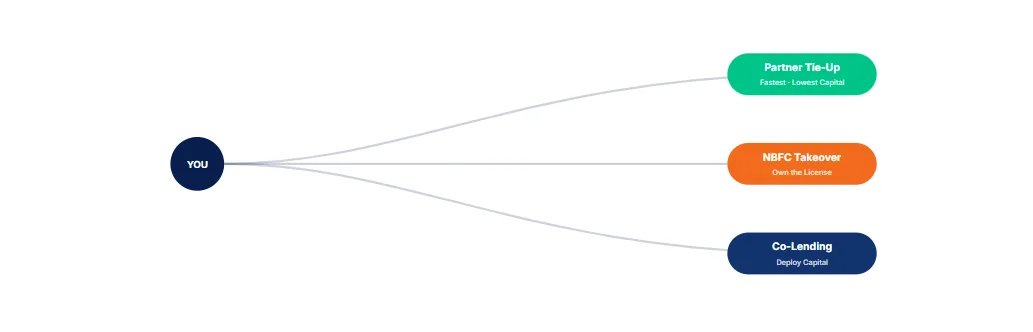
Plug & Play approach ka objective
Entrepreneurs ko help karna:
Business model understand karne mein
NBFC structure evaluate karne mein
Regulatory roadmap understand karne mein
Documentation prepare karne mein
Compliance architecture plan karne mein
Technology ecosystem design karne mein
Lending operations plan karne mein
Growth strategy develop karne mein
Important: Click krein or jaane kya hai “Plug & Play”.
17. Kaun Log Ye Business Start Karna Chahte Hain?
Ye guide particularly useful hai agar aap:
Finance company start karna chahte hain
NBFC register karna chahte hain
Loan company open karna chahte hain
Digital lending startup launch karna chahte hain
Loan app start karna chahte hain
MSME lending business start karna chahte hain
Personal loan business explore kar rahe hain
Existing business ko lending vertical mein expand karna chahte hain
FinTech startup build karna chahte hain
LSP model explore karna chahte hain
Existing NBFC ko expand/restructure karna chahte hain
18. Frequently Asked Questions
Loan dene ka business kaise start karein?
Sabse pehle proposed lending activity ka regulatory classification karein. Agar activity NBFC framework ke under aati hai, to applicable RBI registration, capital, documentation, compliance aur operational requirements evaluate karni hongi.
Kya loan dene ke liye RBI licence chahiye?
Agar business applicable RBI-regulated NBFC framework ke under aata hai, to required RBI Certificate of Registration aur applicable requirements comply karne honge.
NBFC registration ke liye minimum capital kitna hai?
RBI ke current FAQ ke according applicable NBFC registration framework mein ₹10 crore Net Owned Funds requirement hai. Specialized NBFC categories ke requirements different ho sakte hain.
Kya main loan app bana kar loan de sakta hoon?
Sirf app banana lending authorization ka substitute nahi hai. Digital lending mein regulated entities aur LSP/DLA arrangements ke liye RBI framework apply hota hai.
LSP kya hota hai?
LSP regulated entity ka agent/service provider hota hai jo customer acquisition, underwriting support, servicing, monitoring etc. jaise lender functions perform kar sakta hai within the applicable framework.
Kya NBFC sirf online operate kar sakti hai?
Digital lending technology ka use possible hai, lekin regulatory status aur business model requirements ko separately assess karna zaroori hai.
NBFC aur finance company same hain?
Har finance company automatically NBFC nahi hoti. Regulatory classification activity, structure aur applicable law par depend karti hai.
Kya individual loan dene ka business start kar sakta hai?
Individual/personal lending aur regulated financial business ko same nahi samajhna chahiye. Source of funds, scale, frequency, structure aur applicable laws ke basis par legal/regulatory analysis required ho sakta hai.
19. Final Checklist: Loan Business Start Karne Se Pehle
Before investing money, answer these questions:
☐ What loan product will you offer?
☐ Who will your borrowers be?
☐ Where will your lending capital come from?
☐ Are you becoming the lender or an LSP?
☐ Does your activity fall within RBI's NBFC framework?
☐ Which regulatory category applies?
☐ What capital is required?
☐ Are promoter/director requirements satisfied?
☐ Is your compliance framework ready?
☐ Is your technology infrastructure ready?
☐ How will KYC and credit underwriting work?
☐ How will collections and recovery work?
☐ How will customer grievances be handled?
☐ How will you report and monitor the loan portfolio?
Conclusion
India mein loan dene ka business 2026 mein ek attractive opportunity ho sakta hai—but it is not a business where you should start with a website, loan app or marketing campaign and figure out compliance later.
A successful lending business starts with:
Correct Regulatory Structure + Capital + Compliance + Technology + Credit Risk + Customer Acquisition + Recovery
Agar aap NBFC registration, loan company setup, digital lending, LSP model ya Plug & Play NBFC model explore kar rahe hain, to sabse pehla step hona chahiye:
Apne proposed business model ka regulatory assessment.
Bharat Cred Solutions entrepreneurs and businesses ko NBFC setup, regulatory consulting, lending business planning and related compliance requirements ko understand karne mein professional assistance provide karta hai.
Want to explore your lending business model?
👉 Book a consultation with Bharat Cred Solutions.
Have a specific question about this?
Talk it through with our team on a strategy call.